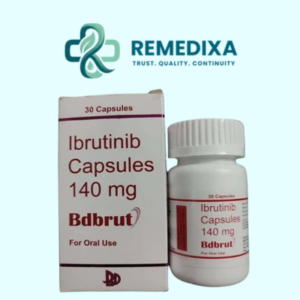

Soranib 200 contains sorafenib, an oral targeted anticancer agent belonging to a group called multikinase inhibitors. Unlike traditional chemotherapy that indiscriminately kills rapidly dividing cells, sorafenib specifically targets certain proteins and pathways that tumors rely on to grow and form new blood vessels.
It is most commonly used in the treatment of advanced liver cancer (hepatocellular carcinoma), advanced kidney cancer (renal cell carcinoma), and thyroid cancer that is resistant to radioactive iodine treatment.
By providing a tailored approach, Soranib helps control cancer growth while generally being better tolerated than many older chemotherapy drugs, although careful monitoring remains essential.
Mechanism of Action
Sorafenib works through a dual mechanism, tackling cancer on two fronts:
Inhibition of tumor cell proliferation
-
Sorafenib blocks several enzymes known as kinases (including RAF kinases) inside cancer cells.
-
These kinases play a critical role in signaling pathways (like the RAF/MEK/ERK pathway) that tell cancer cells to grow and divide.
-
By interrupting these signals, sorafenib slows down or stops cancer cell replication.
Anti-angiogenesis (blocking new blood vessel formation)
-
Tumors need to create new blood vessels to get nutrients and oxygen, a process called angiogenesis.
-
Sorafenib inhibits vascular endothelial growth factor receptors (VEGFR) and platelet-derived growth factor receptors (PDGFR), cutting off the blood supply that tumors need to grow.
Uses
Soranib 200 (sorafenib) is approved and widely used for:
Hepatocellular carcinoma (HCC) —
-
The most common type of liver cancer, especially when it is unresectable (cannot be removed by surgery) or has spread beyond the liver.
Advanced renal cell carcinoma (RCC) —
-
A type of kidney cancer that no longer responds well to initial treatments.
Differentiated thyroid carcinoma (DTC) —
-
Used in certain thyroid cancers that do not take up radioactive iodine, often when the disease is progressive or metastatic.
This makes Soranib an important option for patients who have limited choices after standard treatments.
-